| Company | University of Bath |
| Course | ME30357: User Centred Design |
| Skills Used | Design Thinking, User Research, Foam Modelling, 3D Printing, CAD, Anthropometrics |
| Software | Autodesk Inventor |
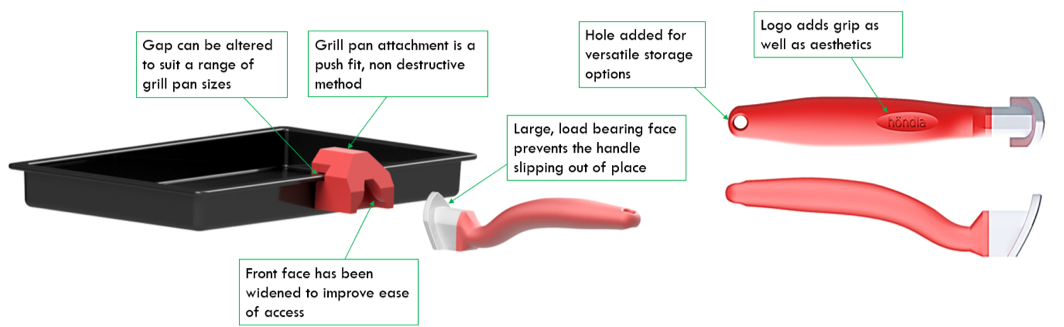
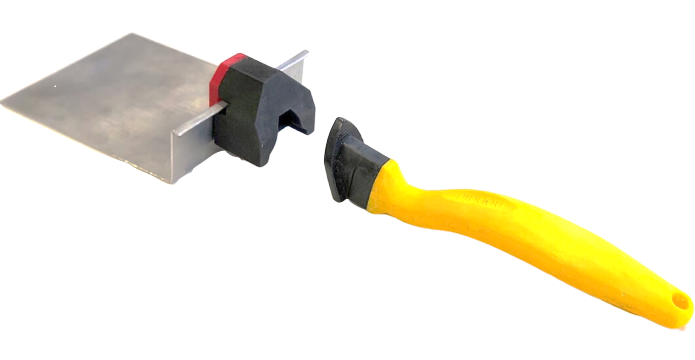
This module taught a user centred design process through the design, building and testing of a product aimed to assist a disabled user in the kitchen through the use of inclusive design. In our group we worked in close collaboration with a user who had a stroke leaving him with limited use of his left arm. The product we created was höndla, a retrofittable grill pan handle that was much simpler to use with one hand.
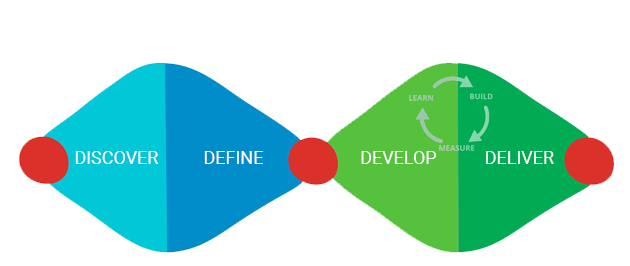
The design process used for this project was the Double Diamond, this was the perfect application for this:
Discover - working with the user to determine his mapping
Define - determine the area we were best placed to make the biggest improvement
Develop - work with the user to build concepts
Deliver - Build the chosen concept to be the best it can
In the first meeting with our user we got to know him, found out his eating habits and how he works with just the use of his right hand. The key finding was that he struggled with the use of his grill due to the mechanism used to attach the handle.
A key part of the interview process was walking through our users cooking routine and creating a job mapping. This allowed us to discover pain points where improvements could be made and also provided valuable insight on what our user found easy and difficult. This information was considered when selecting concepts as motions the user found hard had to be avoided.
Having decided on a way to improve the ease of use of the grill, existing product research and brainstorming was done to look at all elements of how the process could be made easier. These concepts could be split into 3 categories; new grill designs, grill pan re-designs or alternative methods of cooking to eliminate grill use.
A large number of concepts were sketched and subsequently evaluated to narrow down on the best ideas, 6 of these were prototyped using foam and cardboard to present to the user for additional feedback. By watching how the user operated each concept we were able to test how intuitive each design was. Using a weighted scorecard a concept was selected: a detachable grill pan handle.
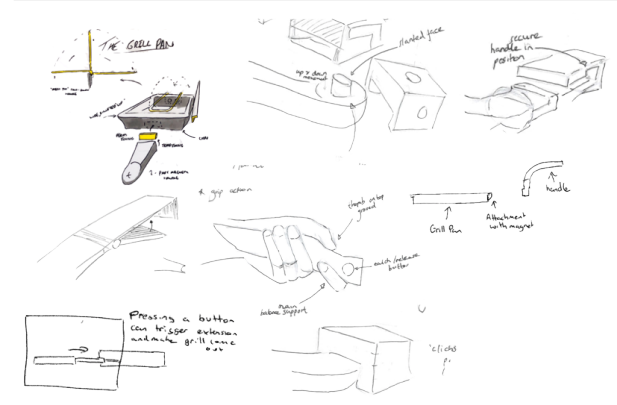
A second phase of brainstorming looked at the ways in which a grill pan handle could be made detachable in an accessible way. Taking on board the feedback from the user, the team aimed for a product that could be attached in one motion without the use of twisting the handle or sliding a switch to connect.
Further prototypes were made to determine how easy each concept would be to use. These included the use of magnets, locating shafts and a curved slot. The insight from these prototypes was that the magnetic system provided strong tactile and audible feedback when clicking into place whereas the curved slot mechanism was easier to use and felt more secure. A decision to develop a product with both of these features was made.
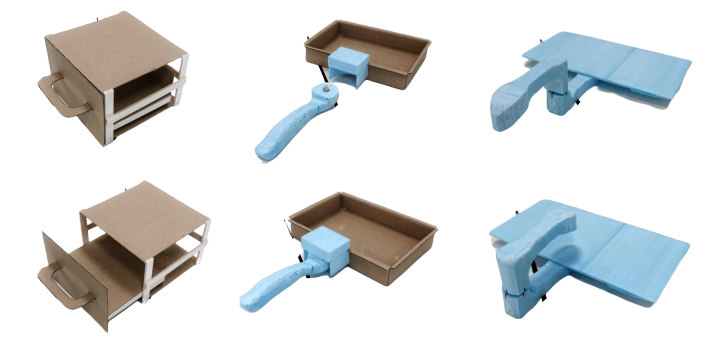
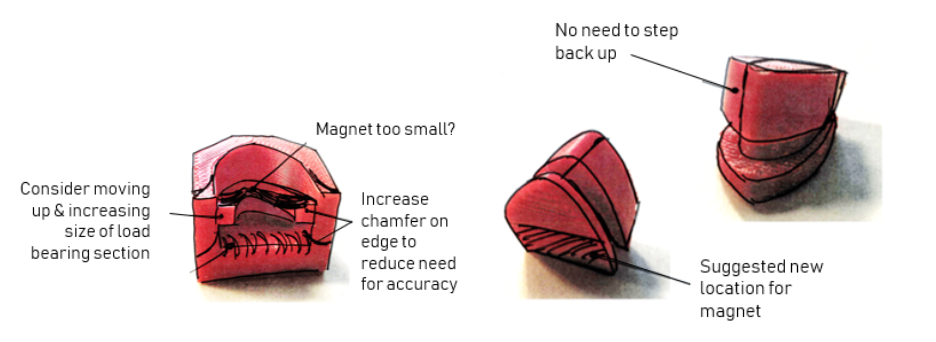
A method of integrating a magnet into the slot was designed using Inventor, in order to speed up prototyping, just the attachment mechanism was 3D printed. It was clear that this version was too bulky and an analysis was done to determine where material could be removed for the second iteration.
A focus was then placed on the handle design. Using anthropometric data, a profile that 95% of the population could grip was drawn. Previous feedback had shown that a curved handle made lifting easier so this feature was applied. Considering material use, silicon was the obvious choice for a product to deal with heat, this would also provide grip. A final modification was to add a thumb locator with the logo embossed for additional grip.