| Company | University of Bath |
| Course | ME40358: Design optimisation |
| Skills Used | Analytical Optimisation, CAD, Aerodynamics, Data Analysis, Generative Design |
| Software | MATLAB, Autodesk Inventor, X-Foil |
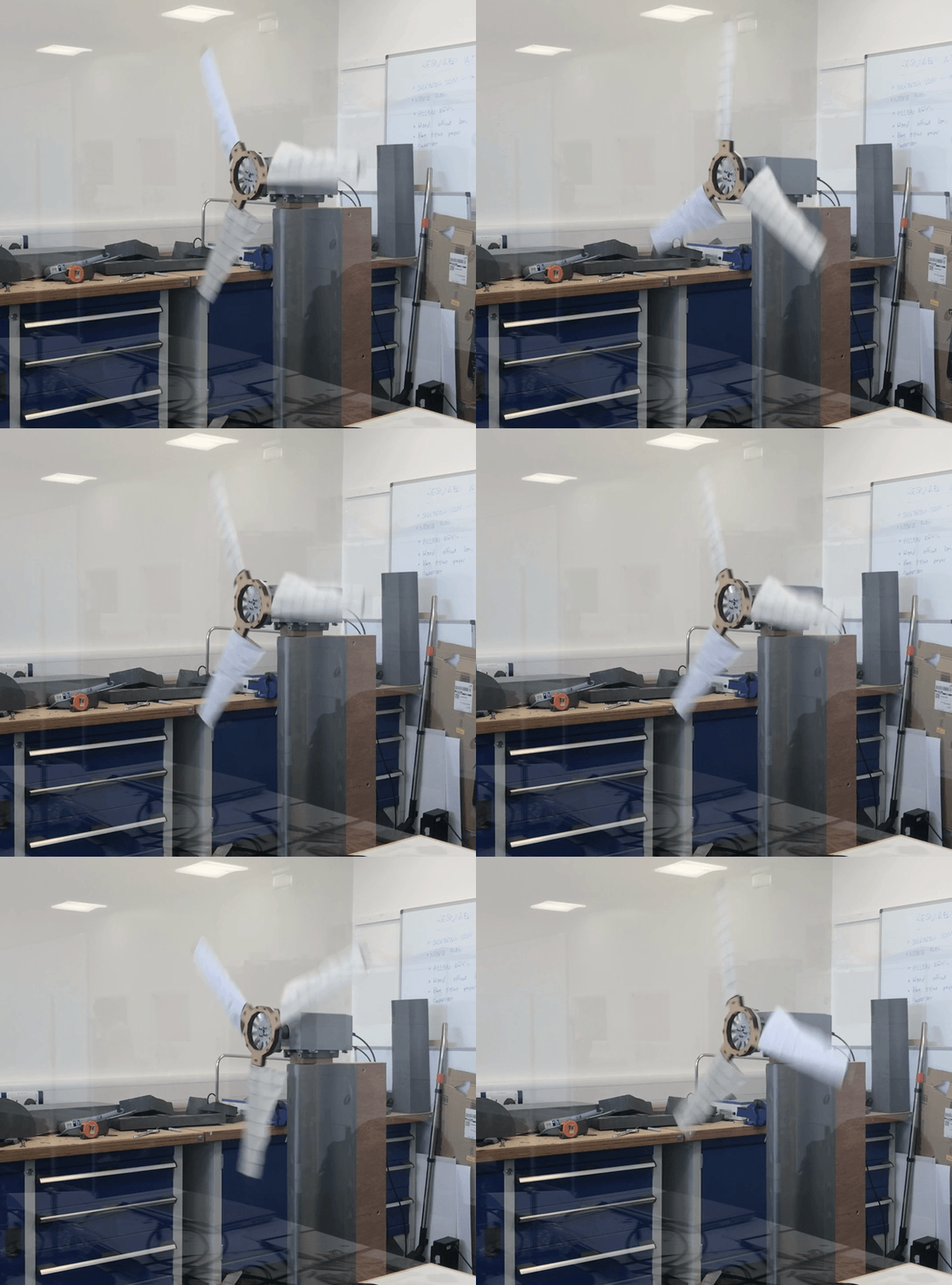
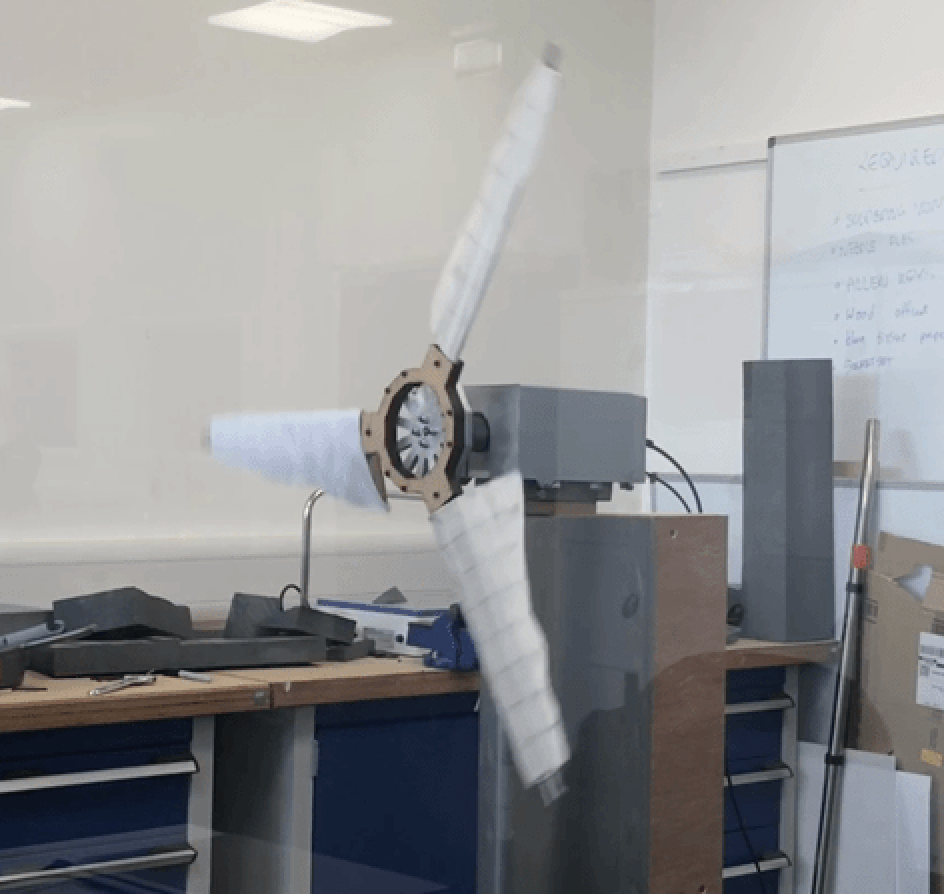
The goal of this module was to cover the principles of design optimisation, generative design and experimental testing through the design of a small scale wind turbine. The result of the project was an accurate MATLAB model for a 3 blade turbine and a high quality prototype of the optimised design.
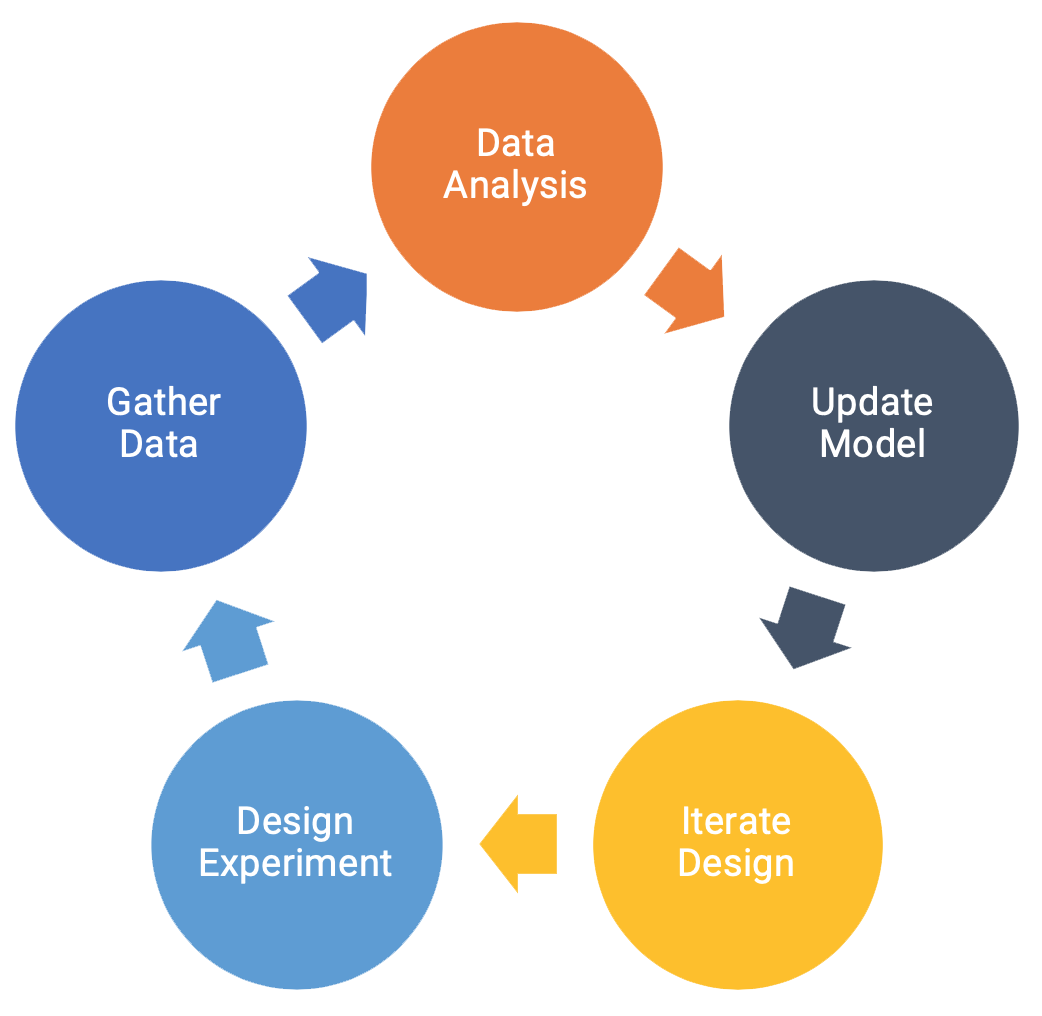
Given the short time-frame of the project the team set out a clear plan of action for an iterative optimisation. An experimental approach was chosen as it would allow the biggest opportunity to include real data in modifications. There were two key reason for this:
1) Understanding of the conditions in the test rig was low therefore confidence in the model could not be high without data gained from testing
2) An unknown factor was manufacturing, building a prototype early would allow more time to resolve production issues
Tests were conducted to discover the significant parameters in wind turbine design. This was completed by carrying out a full factorial experiment and performing an analysis of variance (ANOVA) on the results.
Using open source data from a wind turbine in France, a sensitivity analysis was carried out to give additional factors that could help during the design phase. Outliers in the dataset were removed before the Pearson correlation coefficient was calculated and a neural network was used to run a variance based analysis on the data. This was done by creating a Sobol-set matrix and using a Monte-Carlo method to give a detailed variance based analysis of the available data.

Experiment Setup
A small rig was set up using a desktop fan, cardboard blades and a small motor. This showed some of the significant factors needing to be optimised.
The second phase of the project was using the gathered data to create and optimise a MATLAB model of a wind turbine in order to produce a new design. The chosen approach was using Blade Element Momentum Theory (BEMT). This was an appropriate starting point for the model as it simplified the inputs to a few key parameters such as desired tip speed ratio, wind speed, and number of blades.
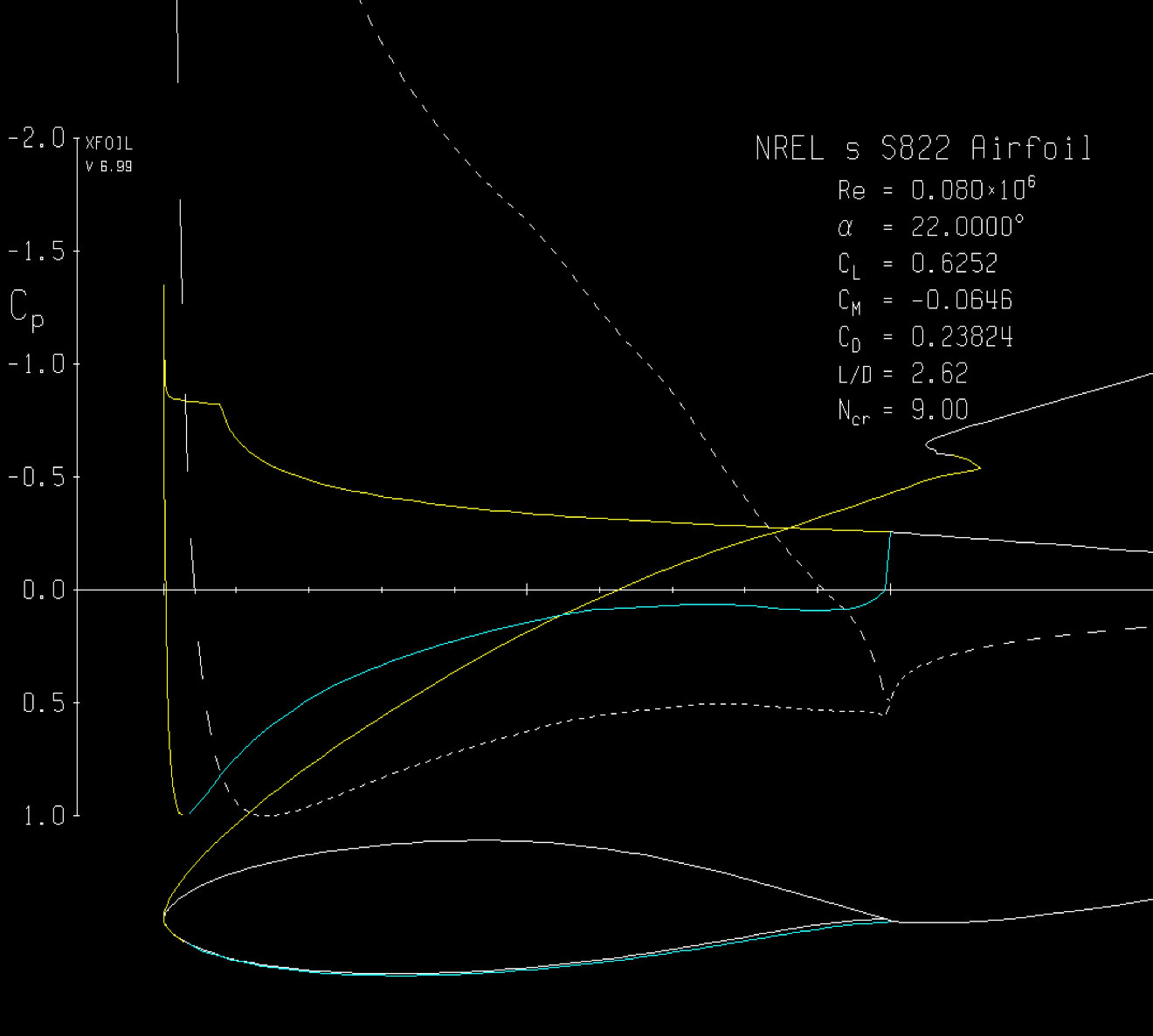
Integrating X-Foil into the model, a program that calculates the lift and drag coefficients of aerofoils at given Reynolds numbers and angles of incidence, increased the accuracy. This also allowed simulations to be carried out to select an aerofoil profile that gave the highest coefficient of power possible. After selecting a profile, the BEMT model was run to generate an initial blade profile that could be modeled in Inventor.
The team had a low level of confidence in the initial model due to the number of unknown factors including induction losses in the generator and tip loses not accounted for in the model. An experimental approach was therefore chosen as the best method to improve the model in the short time-frame. A secondary advantage of this approach was the ability to improve the construction quality and reduce manufacturing time.
A concept that was quick to manufacture and allowed the pitch angle to be changed easily was chosen so additional testing could be carried out with a single blade. This allowed multiple iterations to be carried out in the short time available resulting in a model that converged to real world performance.

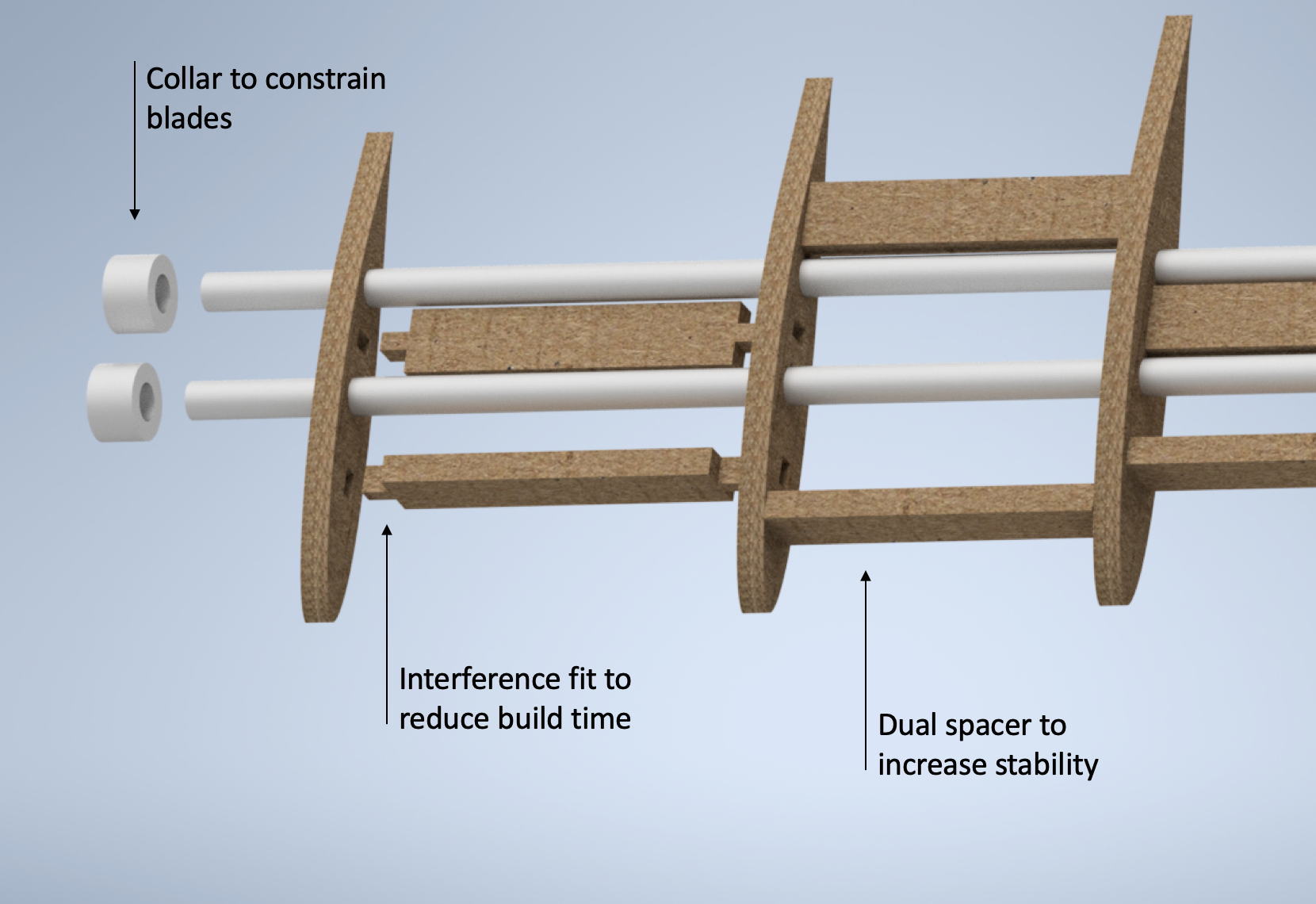
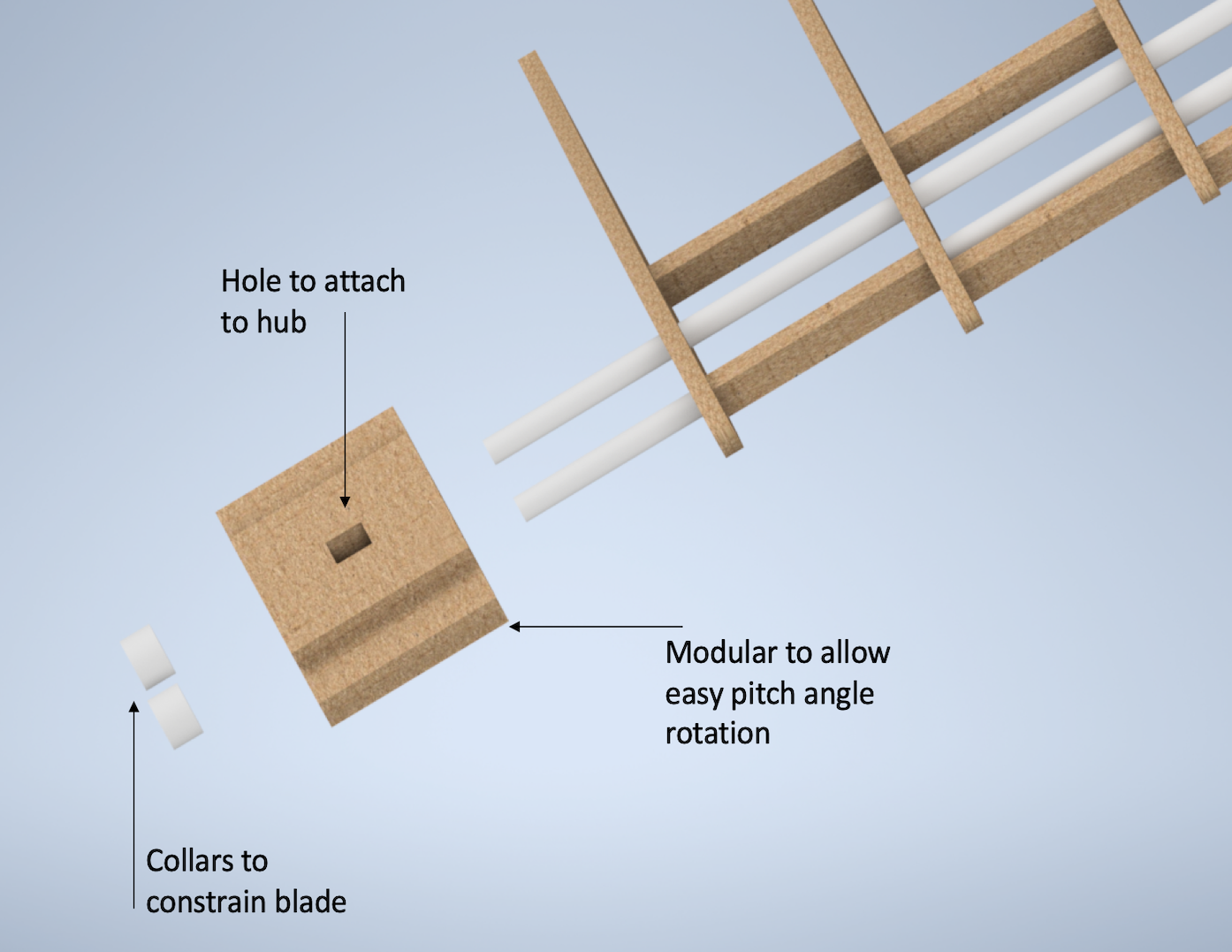
A key change made to the model was the implementation of an angle correction factor to account for losses measured during testing of the first iteration. This was calculated using the difference in designed and measured rotational speed. A final iteration was designed and build using the updated model.
The result of this project was a modified BEMT model that was more specific to the constraints of the test rig. The final blade produced rotated at a tip-speed ratio closer to the desired number showing clear optimisation progress to a more useful model. This turbine showed a 3x increase in power generation and a smoother rotation.